There are many great and free ways to advertise and market a fiction collection.
1. Showcase the new releases. At my branch, we have new fiction and non-fiction shelved right by the front door so that it is impossible to miss. We typically keep new books out for a range of 4 to 6 months depending on space. This is a one stop shop for patrons to browse new titles and authors. All new books are marked as such using red dot labels on the spine making it easy for circulation staff to spot them and shelve them on the correct shelves.
2. Book displays are a fantastic way to market fiction titles. Every month we change our display to showcase different titles and authors. One month we had a "from the bottom shelf" fiction display of books that are rarely checked out because they are shelved on the bottom row and are hard to read unless you bend down. In February of last year we had a display titled "Blind Date with a Book". Employees choose titles that they enjoyed, placed them in manilla envelopes, and typed a blurb on the front giving an abstract of the book but not a title or author. This was extremely popular because so many people like to take risks. Right now we have a display up showcasing books that have been made into movies. We have the book and the movie shelved together on the display. It really doesn't matter what the display is, people are drawn to them no matter what.
3. Book clubs are also a great way to get fiction to circulate. At my branch, we have a popular fiction book club for adults and book club for less none titles. Both have a decent turnout and the books do circulate.
We always have read-a-like bookmarks available on a cart for patrons and these have proved helpful in patrons finding new authors and titles to read.
Sunday, April 27, 2014

Sunday, April 20, 2014
Week 14
First off, I would like to point out that not everyone has control or even a say about what is ordered for their library/branch. At the Allen County Public Library (where I am employed part time) the acquisitions department is in charge of all ordering. My branch will sometimes receive 15 copies of a popular fiction title and sometimes only 3. I am not sure how the ordering is done but I do know that we can request certain things. With that being said, it would not be prudent for a branch at ACPL to separate African American and GLBTQ genres from the general collection as we have no control over how much we will receive. I think it would seem rude and demeaning to have one or two shelves with these separate genres on them. Keeping all genres together in the general collection is the only fair way to do it. Also, space is a huge concern for most of the ACPL branches and again it just would not be prudent to separate different genres.
If you do start separating genres, where do you stop? What about religious fiction or the Amish romance novels? I do believe everything should be shevled together but I also believe that we should showcase these genres and authors. It never fails that books on displays get checked out. You can move books that have not circulated for over a year onto a book display and I guarantee they will be checked out.
So I conclude, showcase NOT separate!!
If you do start separating genres, where do you stop? What about religious fiction or the Amish romance novels? I do believe everything should be shevled together but I also believe that we should showcase these genres and authors. It never fails that books on displays get checked out. You can move books that have not circulated for over a year onto a book display and I guarantee they will be checked out.
So I conclude, showcase NOT separate!!
Tuesday, April 8, 2014
YA Annotation

Divergent
by: Veronica Roth
Published by Harper Collins
487 Pages
9780062024022
Genre: YA, Science Fiction, Dystopian Fiction
Storyline: Intricately Plotted, World-Building
Tone: Bleak, Suspenseful
Style: Compelling
Summary: In a future Chicago, sixteen-year-old Beatrice Prior must choose among
five predetermined factions to define her identity for the rest of her
life, a decision made more difficult when she discovers that she is an
anomaly who does not fit into any one group, and that the society she
lives in is not perfect after all.
Science Fiction Characteristics:
- Futuristic Setting/Storyline
- The setting is not based in reality
- World-Building
- Series Based (Divergent is book 1 in the series; book 2 is Insurgent and book 3 is Allegiant
- Graceling by Kristin Cashore
- Matched by Allyson Condie
- Birthmarked by Caragh M. O'Brien
- Delirium by Lauren Oliver
- Uglies by Scott Westerfeld
Sunday, April 6, 2014
Prompt 12
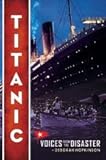
Titanic: Voices from the Disaster
By: Deborah Hopkinson
1. Where is the book on the narrative continuum? A mix - combines highly narrative with some periods of fact based prose.
2. What is the subject of the book? Story of the Titanic from beginning to end told by the surviving passengers.
3. What type of book is it? Reads like a biography of the survivors and witnesses
4. Articulate appeal
- What is the pacing of the book? This book is a quick and easy read.
- Describe the characters of the book? This book contains many accounts from survivors and witnesses. There is nine year old Frankie Goldsmith, Violet Jessop who is a young stewardess, well to do Colonel Archibold Gracie, William Murdoch a brave seaman, Charlotte Collyer a young mother on her way to start a new life, and many, many others.
- How does the story feel? The story reads mostly like fiction with historical facts mixed-in. Although the sinking is sad, this book is interesting from beginning to end.
- What is the intent of the author? To re-tell the story of the Titanic from a narrative perspective using recollections from survivors and witnesses of the sinking.
- What is the focus of the story? The sinking of the Titanic
- Does the language matter? Yes, language is used to help readers experience the emotions of the passengers and witnesses.
- Is the setting important and well described? Yes - I felt like I was there with the passengers and crew members on the ship.
- Are there details and, if so, of what? Lots of details: from the details about the ship to the details of the rescue.
- Are there sufficient charts and other graphic materials? Are they useful and clear? Yes - there were many pictures throughout this book and even a diagram of the Titanic.
- Does the book stress moments of learning, understanding, or experience? Definitely experience. As you are reading, you are experiencing the same events that these survivors and witnesses went through.
5. Why would a reader enjoy this book (rank appeal)?
- Detail - the author uses so much detail that the reader is fully engaged in the story and it almost feels like you are there in 1912 with the passengers and crew.
- Characterization - we get to know these survivors and witnesses through the authors use of characterization.
- Writing Style - This is a fast and easy read
Subscribe to:
Comments (Atom)